


Transparent reporting is key to building trust and showcasing your commitment to sustainability. Let us guide you through the process and elevate your reporting standards.
Crafting a robust sustainability strategy is vital for long-term success. We specialize in developing tailored frameworks that align with your business goals while making a positive impact on the planet.
Equip your team with the knowledge and skills needed to navigate the evolving landscape of Environmental, Social, and Governance factors. Our expert-led training ensures you stay ahead in sustainability practices.
Addressing climate change is a shared responsibility. Partner with us to understand, measure, and reduce your carbon footprint. Let's contribute to a sustainable future together.
Climate Change & Carbon Management
Sustainability Disclosures and Reporting
Sustainability Strategies
Capacity Building & Awareness Program
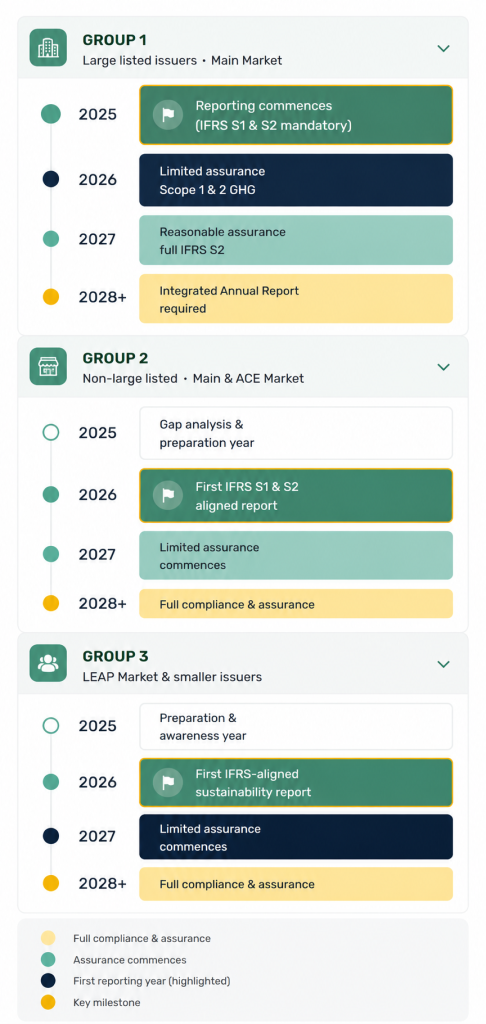
2025
2026
2027
2028+
Large listed issuers
Main Market
Limited assurance
Scope 1 & 2 GHG
Reasonable assurance
full IFRS S2
Non-large listed
Main & ACE Market
Gap analysis & preparation year
First IFRS S1 & S2 aligned report
Limited assurance commences
Full compliance & assurance
Assurance commences
First reporting year (highlighted)
Key milestone
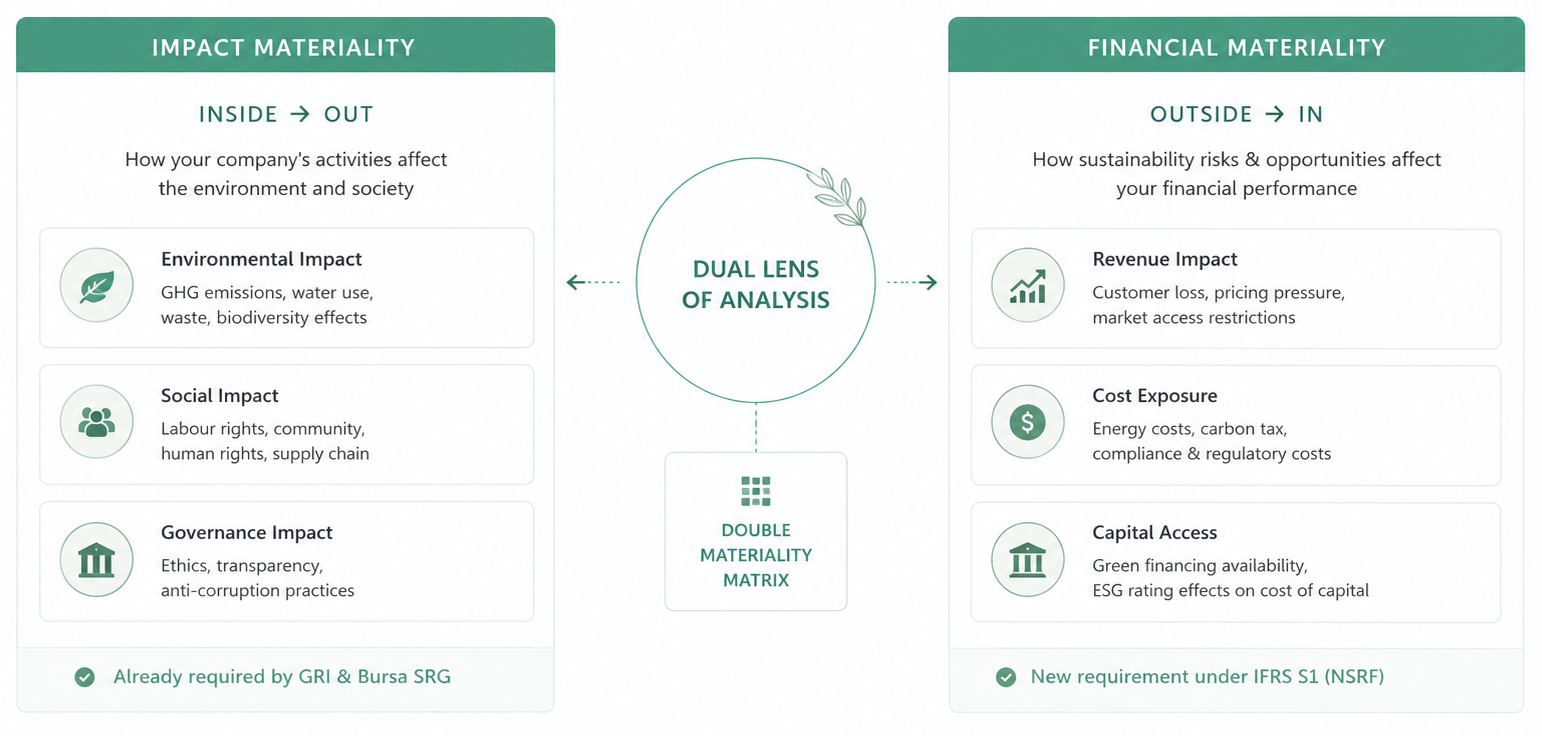
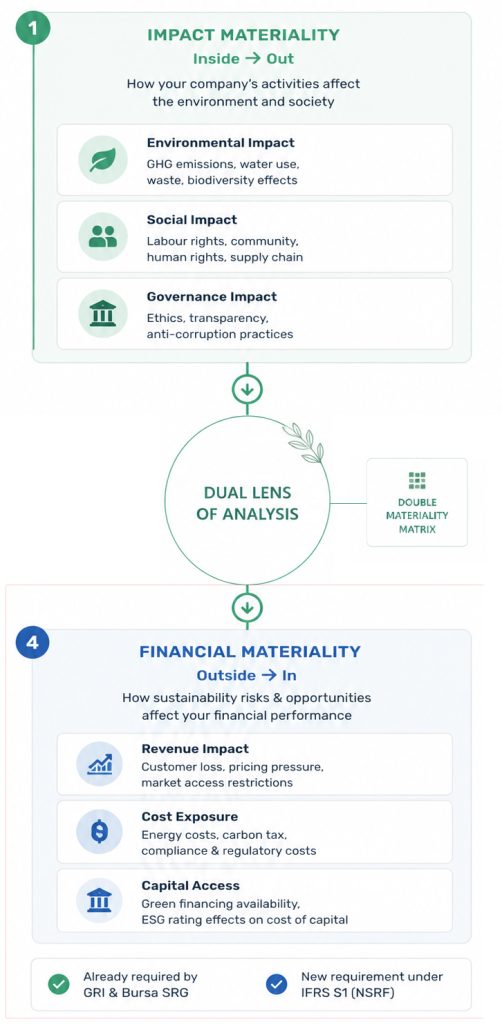
IFRS S1 requires two lenses — most companies are only looking through one
Structured, sequenced, and built around your gaps — from financial materiality to assurance-ready GHG reporting
WS 1
GAP
No financial lens on ESG topics
DELIVERS
Financial materiality register
+ IFRS S1 topic priority list
👥 Finance · Risk · Sustainability
WS 2
GAP
No combined impact + financial matrix
DELIVERS
Double Materiality Matrix
(board-endorsed, Goodwill)
WS 3
GAP
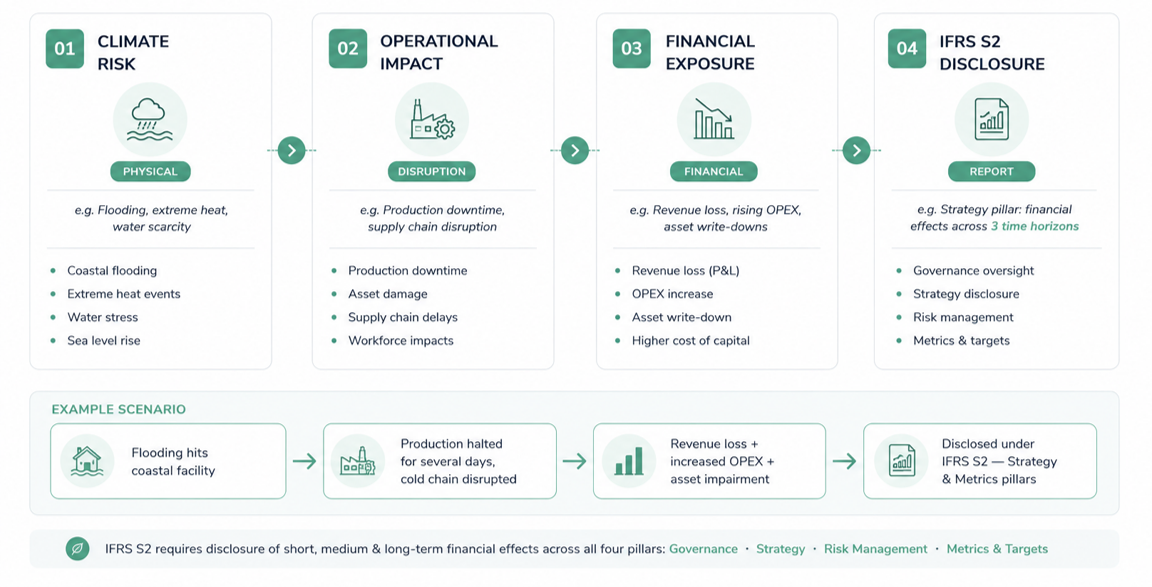
No IPCC/IEA/NGFS scenario analysis
DELIVERS
CRRO register across 3
time horizons + financial effects
WS 4
GAP
No IFRS S1 and S2 disclosure in place
DELIVERS
Excel workbook + Word report
across all 4 disclosure pillars
👥 Finance · Sustainability · Board
WS 5
GAP
No IFRS S1, S2 or SASB indexes
DELIVERS
4 framework indexes + integrated performance summary table
WS 6
GAP
Incomplete Scope 3 coverage
DELIVERS
Full 15-category screening
+ new categories added
1. Gap Analysis
2. Double Materiality
3. Climate Modelling
4. S2 Report
5. Indexes
6. GHG Boundary
Reporting Practices aligned to GHG Protocol Corporate Standard:
Note: A sample value chain has been added above. The aim is to ensure that all the emissions sources are identified through the use of the mapped value chain and add them within the GHG inventory. The GHG inventory would include scopes 1 and 2 of emissions from all business divisions of the reporting organisation
Part of our deliverable to Taliworks’ Carbon Footprint Assessment is a Final presentation, an infographic reporting of the company’s key carbon footprint performance highlights and an Approach Paper covering all the technical aspects of GHG reporting standards.